
Beyond the Trauma: How Sexual Assault Can Affect Mental Health for Years
- Jonathan Thompson
- Apr 30
- 2 min read
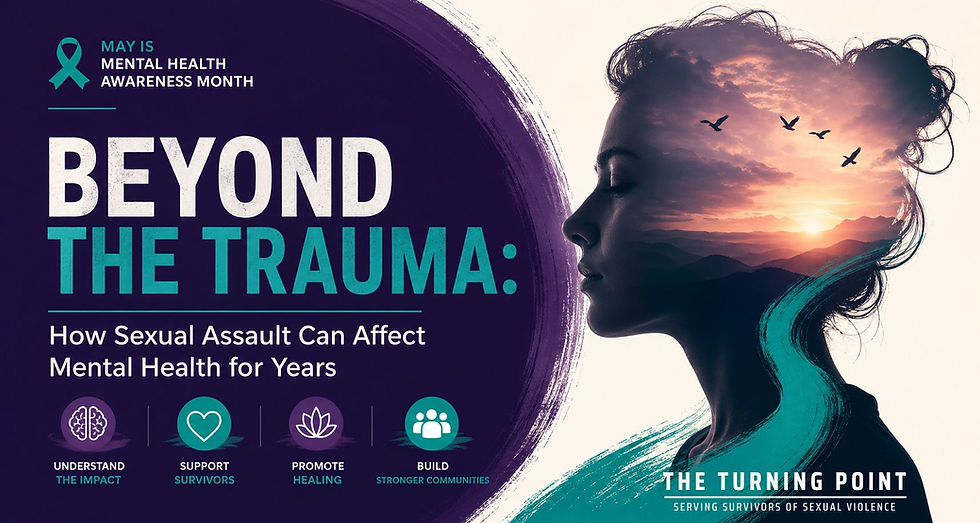
May is Mental Health Awareness Month. It is a time to increase understanding of mental health challenges and reduce stigma. It is also an important time to recognize how trauma can affect mental health over time.
Sexual assault can have lasting effects that continue long after the event. Many survivors face emotional, psychological, and physical impacts for months or years. Recovery timelines vary, and healing does not follow one schedule.
Understanding these long-term effects helps communities respond with informed support.
Trauma Can Affect the Brain and Body
Trauma can change how the brain responds to stress. Survivors may remain in a heightened state of alertness, making it difficult to feel safe or relaxed. This can affect sleep, concentration, memory, and emotional regulation.
Many survivors also experience physical symptoms connected to trauma, including headaches, fatigue, stomach issues, and chronic stress responses.

PTSD and Trauma Responses
Post-traumatic stress disorder (PTSD) is common among survivors of sexual assault. Symptoms may include:
Flashbacks
Nightmares
Avoidance of reminders
Panic responses
Hypervigilance
Emotional numbness
Difficulty trusting others
PTSD symptoms can appear soon after trauma or develop later.

Anxiety and Depression
Many survivors experience anxiety or depression after sexual assault. These conditions may affect daily life, work, school, relationships, and overall health.
Common symptoms include:
Anxiety
Constant worry
Panic attacks
Fear in social settings
Restlessness
Difficulty sleeping
Depression
Loss of interest in activities
Low motivation
Isolation
Changes in appetite
Feelings of hopelessness
These symptoms can continue without access to support or treatment.

Trust and Relationship Challenges
Sexual assault often affects a person’s sense of safety. Survivors may struggle with:
Trusting others
Setting boundaries
Fear of intimacy
Difficulty feeling understood
Withdrawal from relationships
These reactions are common trauma responses.
Impact on Work and Education
Long-term mental health effects can also influence professional and academic goals. Survivors may experience:
Trouble concentrating
Reduced productivity
Missed work or school
Difficulty with deadlines
Increased stress in public settings
Supportive workplaces and schools can reduce barriers to healing.

Substance Use and Coping Behaviors
Some survivors turn to unhealthy coping methods to manage emotional pain. This may include alcohol use, drug use, self-isolation, or other risky behaviors.
These behaviors often reflect untreated trauma and unmet support needs.
Healing Is Possible
Long-term effects do not mean permanent damage. Many survivors improve with the right support. Healing tools may include:
Trauma-informed counseling
Support groups
Medical care
Crisis advocacy services
Mindfulness and stress management
Safe community support systems
Recovery can happen at different stages of life.

How Others Can Help
Friends, family members, coworkers, and communities can support survivors by:
Listening without judgment
Respecting boundaries
Believing disclosures
Avoiding pressure to “move on”
Encouraging professional support
Learning about trauma-informed responses
Why This Matters During Mental Health Awareness Month
May is Mental Health Awareness Month. Mental health conversations should include the impact of sexual violence and trauma. Survivors often carry effects that are not visible to others.
Awareness leads to better support, stronger services, and safer communities.
Support Is Available
If you or someone you know needs support, The Turning Point provides services for survivors and their loved ones. Help is available.
Visit www.theturningpoint.org to learn more.


thap cam tv mới dạo này mình thấy có người nhắc tới khi nói về các nền tảng giải trí trực tuyến nên cũng thử mở vào xem cách họ bố trí giao diện ra sao. Mình không đi sâu vào nội dung hay từng trò cụ thể, mà chủ yếu quan sát cách các chuyên mục được phân chia trên trang và cách thông tin hiển thị cho người dùng. Nhìn tổng thể thì các khu như thể thao, casino, game bài hay slot thường được sắp xếp theo từng nhóm khá rõ, hiển thị dạng khối và danh sách nên lướt qua cũng dễ theo dõi. Các bảng dữ liệu được trình bày dạng cột khá gọn, giúp…
tải hitclub dạo này thấy bạn bè nhắc hoài nên mình cũng bấm vào xem thử cho biết. Mình không chơi gì cả, chỉ xem trang họ trình bày ra sao thôi. Cảm giác đầu tiên là bố cục khá “sạch”, kéo xuống là các đoạn giới thiệu được chia thành từng khối nhìn rõ ràng nên đọc lướt vẫn hiểu. Có chỗ họ ghi hoạt động từ 2019 với cộng đồng hơn 10 triệu hội viên, mình thấy thông tin này để ngay trong phần giới thiệu nên không phải tìm lâu. Mấy tiêu đề to, khoảng cách giữa các mục vừa phải, chữ không bị dày đặc nên đỡ mỏi mắt. Nói chung kiểu giao diện này hợp…
luong son tv mình thấy nhắc hoài nên cũng bấm vô coi thử cho biết, kiểu tò mò giao diện thôi chứ không có ngồi xem kỹ nội dung gì. Vào cái là thấy trang làm khá thoáng, nhìn không bị ngộp chữ, mấy phần chính được chia nhóm rõ ràng nên mới vô cũng không bị lạc. Mình thích nhất là cách họ trình bày theo dạng khối với danh sách, kéo xuống là thông tin hiện ra liền, ít phải bấm qua lại nhiều. Menu để chỗ dễ thấy nên chuyển mục khá nhanh, không phải căng mắt tìm nút. Nói chung cảm giác dùng nhẹ nhàng, nhìn một lúc là quen tay, nhất là mấy bảng thông…
This article sheds light on an important aspect of mental health, especially during Mental Health Awareness Month. It's crucial to recognize the long-term effects of trauma on survivors. Understanding this can help us provide better support. Word to markdown, it's a thought-provoking read.
Sexual assault leaves slope run lasting and complex impacts on mental health, often lasting for years after the event. The recovery process is not just about overcoming traumatic memories, but also about rebuilding trust, safety, and personal identity.