
Different Stories, Shared Healing: PTSD, Pride, and the Power of Community
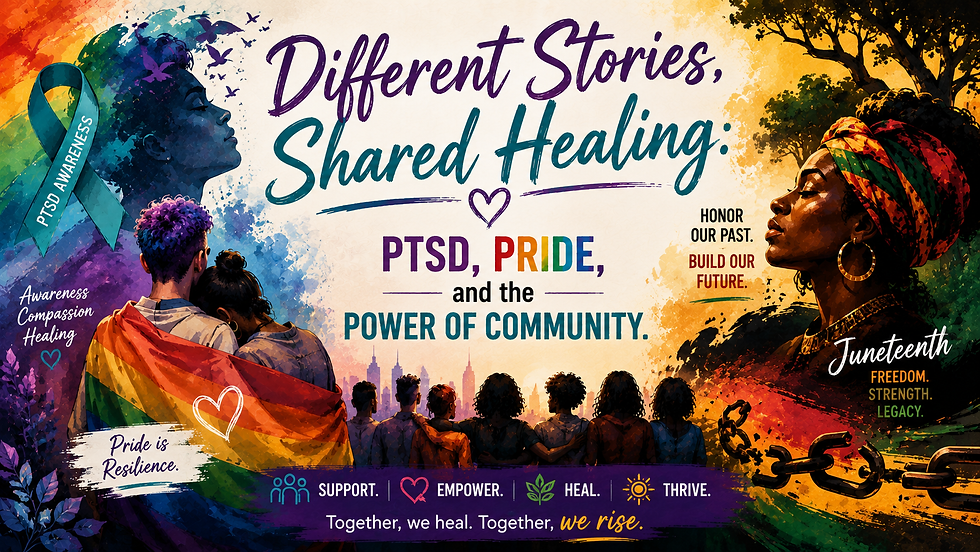
June is a powerful month of remembrance, resilience, liberation, and healing. As we recognize PTSD Awareness Month alongside Pride Month and Juneteenth, we are reminded that trauma does not exist in isolation. Trauma is often shaped by identity, lived experiences, discrimination, violence, and systems that impact how individuals move through the world.

At The Turning Point, we believe healing must be inclusive, compassionate, and trauma-informed for every survivor we serve. This month, we honor the strength of LGBTQ+ individuals and African American communities while acknowledging the unique ways trauma and PTSD can affect these populations.
Understanding PTSD Beyond the Stereotypes
Post-Traumatic Stress Disorder (PTSD) is often misunderstood. Many people associate PTSD only with military combat veterans, but PTSD can develop after surviving sexual assault, domestic violence, hate crimes, childhood abuse, community violence, discrimination, medical trauma, or repeated exposure to unsafe environments.
PTSD can look different from person to person. Some individuals experience flashbacks, panic attacks, nightmares, or hypervigilance. Others may struggle with emotional numbness, anxiety, depression, difficulty trusting others, irritability, dissociation, or chronic feelings of shame and fear.
For many survivors, trauma does not come from one single event. It can come from years of experiencing rejection, violence, racism, homophobia, transphobia, or systemic injustice.
PTSD Within the LGBTQ+ Community
For many LGBTQ+ individuals, trauma can begin early in life through rejection, bullying, family conflict, discrimination, or fear of being fully seen and accepted. Some survivors carry the emotional impact of hate crimes, sexual violence, relationship abuse, homelessness, or harmful experiences within healthcare, workplaces, or faith communities.

PTSD within the LGBTQ+ community may sometimes appear as chronic anxiety, people-pleasing behaviors, emotional withdrawal, fear of intimacy, hyper-independence, or difficulty feeling safe in relationships and public spaces. Many individuals learn to stay constantly alert to protect themselves emotionally and physically.
Pride Month is a celebration of identity, authenticity, and progress — but it is also rooted in resistance, survival, and the fight for safety and dignity. Behind the celebrations are real stories of resilience from individuals who have survived trauma while continuing to seek belonging and healing.
At The Turning Point, we are committed to creating affirming spaces where LGBTQ+ survivors feel heard, respected, and supported without judgment.
PTSD Within African American Communities
Juneteenth commemorates freedom, resilience, and the enduring strength of African American communities. It also invites important conversations about generational trauma, racial trauma, and the ongoing impact of systemic inequities.

African American individuals often face unique barriers when it comes to recognizing and addressing PTSD. Trauma may stem from experiences of racism, community violence, historical oppression, economic hardship, discrimination within systems, or personal experiences of violence and abuse.
In many families and communities, survival has required strength and perseverance through unimaginable hardship. Because of this, mental health struggles are sometimes minimized, misunderstood, or left unspoken due to stigma, mistrust of systems, or lack of culturally responsive care.
PTSD within African American communities may present through chronic stress, emotional exhaustion, sleep difficulties, physical health symptoms, anger, isolation, or feeling emotionally “shut down.” Some survivors may feel pressure to remain strong at all times, making it difficult to ask for help or prioritize their own healing.
Healing does not make someone weak. Seeking support is an act of courage.
Where Our Experiences Intersect

While the LGBTQ+ community and African American community may experience trauma differently, there are important shared experiences that connect both communities:
Fear of not being believed
Experiences with discrimination or marginalization
Barriers to accessing safe mental health support
Pressure to stay silent or “push through”
Difficulty feeling emotionally or physically safe
Increased vulnerability to violence and trauma
The need for community, belonging, and affirmation
Many individuals hold multiple identities and navigate overlapping experiences of trauma, discrimination, and resilience. Healing spaces must recognize the complexity of those lived experiences.
How The Turning Point Supports Survivors
At The Turning Point, we provide trauma-informed services that center safety, empowerment, and healing for survivors from all backgrounds and identities. Our services include:

Individual counseling
Group therapy and support groups
Crisis intervention
Advocacy services
Hospital accompaniment
24/7 sexual assault hotline support
Prevention education and community outreach
We also recognize that healing looks different for everyone. Some survivors heal through counseling conversations. Others heal through grounding techniques, movement, mindfulness, art,
connection, advocacy, or community support.
This PTSD Awareness Month, we encourage survivors to give themselves permission to seek support, prioritize rest, and acknowledge that healing is not linear.
Whether someone is navigating the impacts of sexual violence, racial trauma, identity-based harm, or years of silent survival — they deserve compassionate care and spaces where they can feel safe being fully themselves.
Healing Is Possible
Pride Month reminds us that authenticity matters. Juneteenth reminds us that liberation matters. PTSD Awareness Month reminds us that healing matters.
At The Turning Point, we believe every survivor deserves support, dignity, and hope.
No matter your story, you are not alone.


I enjoyed the practical approach used in this post. The information is clear, the explanations are direct, and the structure makes reading comfortable. It is a useful article for readers who want to learn more without dealing with complicated wording.
9k club
This article highlights how shared community experiences, from PTSD support to Pride celebrations, foster resilience and healing. After reflecting on such collective strength, I often reset with short interactive breaks—Fnaf offers that same mix of intensity and focus, balancing emotional awareness with playful concentration that keeps energy flowing.
Wordle Today
having a reliable destination for hints, strategic guidance, and daily answers can save your stats without spoiling the fun
I've found the exploration of community healing through shared stories in your post quite enlightening. How do you think activities like running games could also enhance these connections among individuals dealing with PTSD? Could they serve as a bridge for deeper conversations?
FNAF 4 transforms fear into a challenge, inviting players to overcome terrifying odds and prove their courage in the face of endless nightmares.